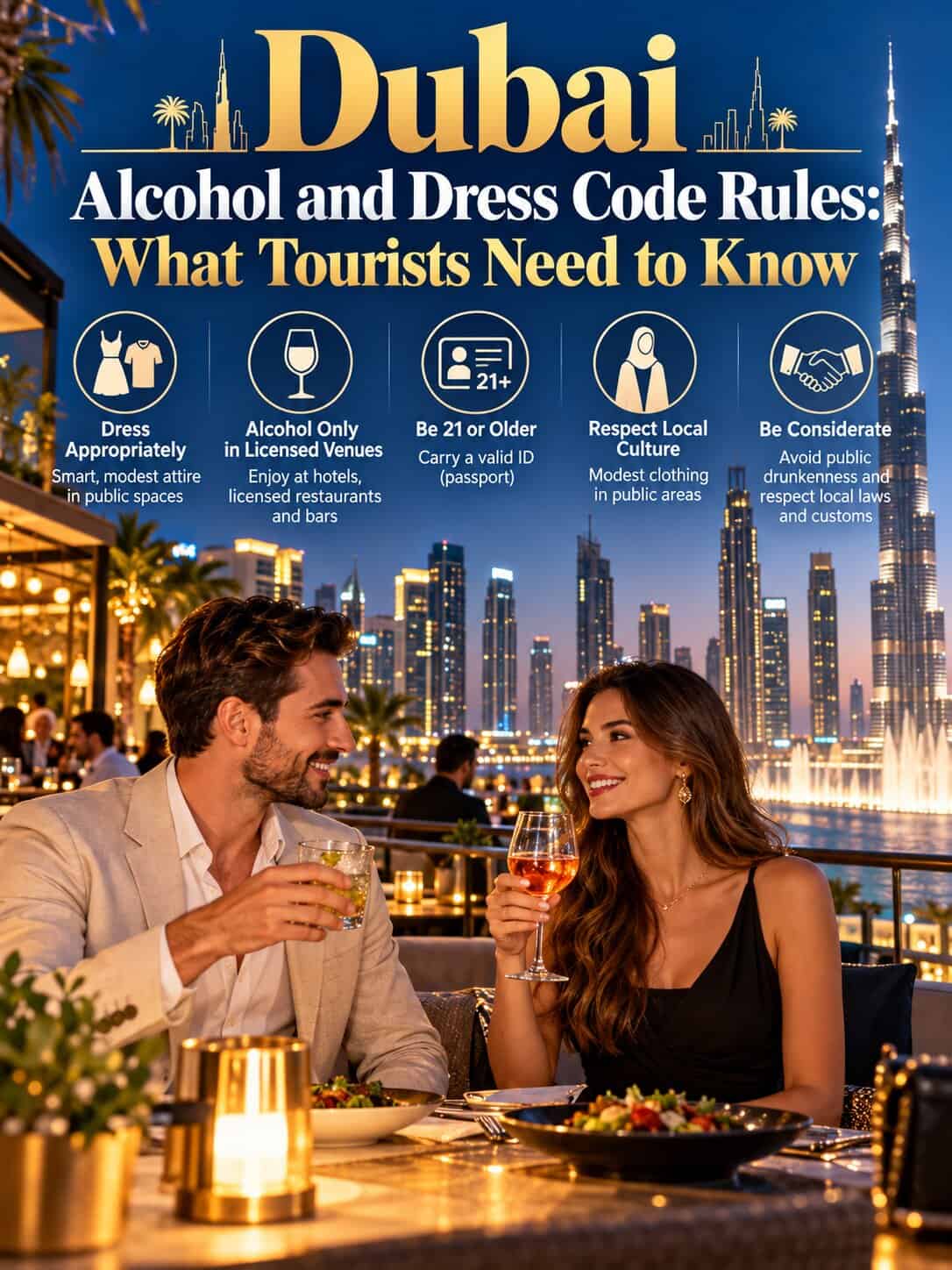
Dubai alcohol laws allow adults aged 21 and over to drink in licensed hotels, bars, restaurants and other authorised venues, but drinking or being intoxicated in public and driving after alcohol are prohibited. The Dubai dress code is more flexible than many visitors expect: ordinary tourist clothing is widely accepted, while modest attire is recommended in historic areas and required at mosques. This guide explains retail alcohol licences, tourist purchase rules, Ramadan, beaches and differences between Dubai and Sharjah. For the wider picture, see our guides to Dubai and is Dubai safe for tourists.
Dubai Alcohol and Dress Code Rules: The Quick Answer
Dubai’s legal drinking age is 21. Eligible visitors can order alcohol at licensed venues without obtaining a retail alcohol licence first, but they must be ready to show valid identification. Retail purchases for consumption in private accommodation follow a separate licensing procedure. Women do not ordinarily need to cover their hair or wear traditional dress in Dubai, although mosques impose stricter visitor attire requirements. Do not drink alcohol on public beaches, streets or other public spaces, and avoid drunken or disorderly behaviour. Public displays of affection beyond holding hands may cause problems, and inappropriate or offensive clothing can be refused at particular venues. Legal consequences depend on the specific conduct and applicable law, so treat these as real risks rather than only etiquette.
Dubai Alcohol Laws: At-a-Glance Rules for Tourists
| Situation | What applies in Dubai |
|---|---|
| Legal drinking age | 21 years |
| Drinks at licensed bars and restaurants | Permitted for eligible adults; bring ID |
| Retail purchases for private use | Free Dubai licence required, including temporary tourist licence |
| Public beaches, streets, public transport | Do not drink alcohol or become intoxicated in public |
| Driving after drinking | Prohibited regardless of amount consumed |
| Shops and supermarkets | Alcohol is not ordinary supermarket merchandise; use licensed retailers |
| Sharjah | Sale, drinking and possession prohibited |
These rules distinguish licensed on-site consumption from retail alcohol purchases. A tourist licence allows eligible shopping at authorised retailers but does not make public drinking lawful or override the rules of another emirate.
Dubai Alcohol Laws: Where You Can (and Can’t) Legally Drink
The minimum legal age for alcohol in Dubai is 21. Eligible tourists can buy alcoholic drinks for consumption at licensed hotel bars, restaurants and clubs without first applying for a retail alcohol licence, subject to identity and venue entry checks. Private possession and consumption are subject to local licensing rules: UK government travel advice states that a licence is required for private consumption in Dubai, including homes or private parties. A temporary tourist retail alcohol licence can be obtained through authorised sellers for private-use purchases. Alcohol consumption and public intoxication are prohibited in public places, including streets, parks, public beaches and public transport. Never drink in a vehicle or drive after drinking. Keep alcohol sealed during permitted transport and respect different emirate rules.
Buying Alcohol Under Dubai Alcohol Laws: Stores, Licences and Duty-Free Limits
Alcohol isn’t sold in supermarkets or convenience stores in Dubai — not even beer. It’s sold only through two licensed retail chains, MMI (Maritime and Mercantile International) and African+Eastern, both with branches scattered across the city. Tourists need a temporary Dubai alcohol licence to purchase alcohol from authorised retail stores. Authorised retailers such as African + Eastern say visitors aged 21 or over can apply using their passport, either online or at a participating store, and can begin shopping once approved. The licence is free under the current system. Residents apply using their Emirates ID. A retail licence is different from ordering a drink at a licensed hotel bar. Dubai customs publishes a passenger allowance of up to four litres of alcoholic beverages or two cartons of beer, each containing 24 cans of up to 355 ml. This is an alternative allowance rather than an unrestricted sum of both. Dubai Duty Free also runs arrivals shops at Dubai International (DXB) that sell alcohol to arriving passengers, so you can buy after landing instead of carrying bottles through departure and transit security. Cabin baggage and sealed duty-free transport depend on airport security, liquid restrictions and flight connections.
How Tourists Get a Dubai Alcohol Licence
- Be at least 21 years old and hold a valid passport.
- Visit an authorised retailer such as African + Eastern or MMI, or use its current tourist registration process.
- Submit your passport details for a temporary Dubai tourist alcohol licence.
- After the licence is approved, purchase alcohol for permitted private use.
- Keep purchases within local rules and do not take alcohol into Sharjah.
Authorised retailers state that tourist registration is free and eligible visitors can begin purchasing after approval. UK official travel advice distinguishes this licence from buying a drink in a licensed hotel bar, where a retail licence is not required.
Dubai Duty-Free Alcohol Allowance
| Category | Published Dubai Customs limit |
|---|---|
| Alcoholic beverages | Up to 4 litres |
| Beer alternative | Up to 2 cartons, each containing 24 cans of up to 355 ml |
| Both limits combined | Do not treat as freely cumulative |
Customs allowances are distinct from airline cabin-liquid and baggage-security rules. For international connections, duty-free liquid carriage may depend on sealed security bags and the transit airport.
Dubai Alcohol Laws on Drunk Driving and Public Intoxication
Drink-driving is prohibited in Dubai regardless of the amount consumed. Federal Decree-Law No. 14 of 2024 on Traffic Regulation, in force since March 29, 2025, lists driving under the influence of alcohol among the violations that carry strict penalties, including fines, imprisonment, license suspension and vehicle impoundment depending on the offense and court decision. Use a licensed taxi or ride-hailing service after drinking. Being under the influence of alcohol in a public place is illegal, and offences involving disturbance, harassment or other misconduct can lead to arrest and serious legal consequences. Leaving a licensed bar does not exempt a visitor from public-intoxication rules.
Dubai’s Unwritten Dress Code: What to Avoid Wearing
Dubai does not impose one citywide list of prohibited casual garments. UAE public-decency rules prohibit indecent exposure and offensive conduct, while individual malls, government buildings and religious venues may apply specific entry standards. Official UAE government guidance advises against transparent or excessively revealing outfits and clothing with offensive slogans or imagery. Covering shoulders and knees is a practical conservative choice in malls, government offices and heritage areas, not a universal law requiring those exact measurements for every public street in Dubai. Visit Dubai confirms that a wide range of ordinary tourist clothing is accepted, including summer dresses and shorts in appropriate settings. Swimsuits and bikinis are acceptable at beaches, hotel pools and waterparks; swimwear should not be worn through shopping malls, restaurants or other general public spaces. Topless sunbathing and nudity are prohibited. Men may wear ordinary sleeveless tops in many casual leisure settings, but should dress appropriately for malls, restaurants and government buildings.
Dubai Dress Code: What to Wear by Location
| Location | Recommended clothing | What to avoid |
|---|---|---|
| Dubai Mall and shopping centres | Regular tourist clothes; modest coverage recommended | Swimwear, transparent or offensive clothing |
| JBR, Kite Beach, hotel pools | Normal swimwear and bikinis at beach/pool | Topless or nude sunbathing |
| Old Dubai and Al Fahidi | Shoulders and knees covered as a courtesy | Very revealing or culturally offensive outfits |
| Jumeirah Mosque or other visitor mosque | Loose, opaque arms/legs coverage; women cover hair | Shorts, sleeveless tops, uncovered hair for women |
| Government buildings | Conservative daytime clothing | Very short, transparent or inappropriate attire |
| Fine-dining and rooftop bars | Follow venue dress code, usually smart casual or smarter | Beachwear; sportswear where prohibited by venue |
| Desert safari | Breathable clothing, practical shoes, warm layer in winter | Unsuitable footwear for sand activities |
Visit Dubai’s clothing guidance confirms that ordinary shorts, dresses and casual outfits are generally accepted. A shoulders-and-knees recommendation is not an absolute legal rule for every public street. Religious venues are the main exception requiring more specific coverage.
Public Displays of Affection: What’s Allowed and What Isn’t
Visit Dubai and the UK government advise that holding hands is generally acceptable, while kissing and overt physical affection in public can cause legal problems. Public-decency enforcement depends on the conduct and context, and visitors should avoid conspicuous public displays of affection. Tourist status does not exempt a visitor from public-decency rules, and an informal warning cannot be guaranteed. The practical guidance is to keep intimate displays of affection private and follow any instructions from venue staff or authorities.
Mosque Dress Code: What’s Different
Visitor-accessible mosques apply stricter dress rules than ordinary streets. Men should cover shoulders and legs; women should wear loose, opaque clothing covering arms and legs and a headscarf covering the hair. An abaya may be required or accepted depending on the mosque’s own regulations, but do not assume complimentary loan garments are available. Bring suitable clothing yourself, especially when visiting Sheikh Zayed Grand Mosque in Abu Dhabi.
Dubai Alcohol and Dress Code Rules Change During Ramadan
During Ramadan, some restaurants, beach clubs and licensed bars adjust opening hours, live entertainment or alcohol service, while others continue to operate under their approved arrangements. There is no reliable universal rule that all licensed venues stop alcohol service from dawn to sunset. Dress respectfully, especially near mosques, and be considerate of those fasting; check the actual venue’s programme instead of assuming every hotel bar closes or reopens at the same hour.
Dubai Alcohol Laws During Ramadan
| Topic | Visitor planning advice |
|---|---|
| Licensed venues | Opening hours and alcohol service may differ by operator |
| Restaurants and cafés | Some may use screened-off daytime dining areas |
| Public behaviour | Be considerate of those fasting and avoid disruptive conduct |
| Dress code | Modest clothing is particularly advisable around religious settings |
| Entertainment | Some live music, performances and late-night programmes change |
Do not assume that all bars stop serving alcohol from dawn to sunset. Seasonal rules and individual venue licences can produce different arrangements, and religious occasions and public holidays may also change trading hours.
Sharjah and Other Emirates: Rules Change When You Cross a Border
Sharjah is a dry emirate: UK and US government travel guidance states that drinking and possessing alcohol are illegal there, with no exception merely because a visitor bought the alcohol lawfully in Dubai. Do not bring alcohol into Sharjah, including while driving through the emirate. Alcohol rules differ elsewhere in the UAE, so a Dubai retail licence does not authorise purchases or consumption in every other emirate. Sharjah is generally more conservative than Dubai, and visitors should choose modest clothing for public and cultural areas. Abu Dhabi also permits licensed alcohol service; its retail-licensing arrangements differ from Dubai. The smaller emirates (Ajman, Ras Al Khaimah, Fujairah, Umm Al Quwain) generally allow alcohol in licensed hotel venues, though availability varies more by property than by emirate-wide policy.
Dubai vs Sharjah Alcohol Rules
| Question | Dubai | Sharjah |
|---|---|---|
| Licensed bar alcohol | Available to eligible adults aged 21+ | Prohibited |
| Retail alcohol shopping | Authorised retailers with Dubai licence | Prohibited |
| Possessing alcohol | Subject to applicable private-use rules | Prohibited |
| Public drinking | Prohibited | Prohibited |
| Dress expectations | Flexible in tourist areas, conservative in heritage spaces | Generally more conservative |
Do not transport alcohol through Sharjah just because it was bought legally in Dubai. A Dubai retail licence does not override the alcohol laws of neighbouring emirates.
Dubai Alcohol Laws and Dress Code: Quick Reference
Alcohol: minimum age 21. Licensed bars, restaurants and clubs may serve eligible adults without a retail licence. Retail purchases from authorised shops require a Dubai alcohol licence; tourists can obtain a free temporary one using a passport. Drinking or being intoxicated in public and driving after alcohol are prohibited. Dubai Customs’ published passenger duty-free allowance is up to four litres of alcohol or two cartons of 24 beers up to 355 ml each, subject to entry requirements. Dress: normal tourist clothing is broadly accepted; choose modest outfits for malls, historic districts and government buildings. Swimwear belongs at beaches and pools, and topless sunbathing is prohibited. Holding hands is generally acceptable, while kissing and overt public intimacy should be avoided. Mosques require covered arms and legs and head coverings for women; bring your own garments. Sharjah is a dry emirate with more conservative public expectations.
Frequently Asked Questions
Can tourists drink alcohol in Dubai?
Eligible adults aged 21 or over may drink alcohol in licensed hotel bars, restaurants and clubs without a retail liquor licence. Private consumption is subject to Dubai licensing rules. Drinking or being intoxicated in public places is illegal.
Do you need a license to buy alcohol in Dubai?
Tourists need a temporary Dubai alcohol licence to buy alcohol at authorised shops such as MMI and African + Eastern. The application is free and can be completed using a valid passport online or at a participating store. Residents use their Emirates ID.
What is the dress code for tourists in Dubai?
Dubai’s everyday dress code is flexible. Covering shoulders and knees is sensible in conservative public and heritage settings, not an absolute rule for every outing. Bikinis are permitted at beaches and pools; topless sunbathing is prohibited. Mosque visitors need modest clothing covering arms and legs, with a headscarf for women.
Is PDA illegal in Dubai?
Holding hands is generally accepted. Public kissing and conspicuous displays of affection can lead to intervention or legal consequences, and visitors should avoid them. Penalties depend on the circumstances.
Do Dubai alcohol and dress code rules change during Ramadan?
Ramadan can affect restaurant opening hours, entertainment and alcohol service, but these vary by operator. Dress and behave respectfully around people fasting, and check each venue’s Ramadan arrangements instead of assuming a citywide daytime alcohol ban at all licensed bars.
Is alcohol legal in Sharjah?
No. Alcohol sale, drinking and possession are illegal in Sharjah, even for tourists; do not drive through or enter Sharjah carrying alcoholic beverages.
What is the legal drinking age under Dubai alcohol laws?
21 years. Licensed Dubai bars and restaurants can serve eligible adults, subject to ID checks and venue entry policies.
Do tourists need an alcohol licence in Dubai?
For retail purchases at authorised alcohol shops, yes: a free temporary tourist licence can be issued using a valid passport. A retail licence is not required simply to order a drink in a licensed bar.
Can I drink alcohol in a Dubai hotel room?
Private consumption is subject to Dubai’s licensing requirements. UK government advice says a liquor licence remains required for private places, including homes or parties.
Can I drink beer on JBR or Kite Beach?
No. Public beaches are not lawful places to drink alcohol, even if a nearby licensed hotel or beach club serves it within its own authorised premises.
Can women wear shorts in Dubai?
Yes, ordinary shorts and summer clothes are widely accepted, although more modest coverage is recommended at heritage sites, malls and government offices. A mosque has different rules.
Do women need to cover their hair in Dubai?
Not generally. Women are expected to cover their hair when entering mosques that require it.
Can men wear sleeveless shirts in Dubai?
Casual sleeveless clothing may be acceptable in leisure settings, while venues such as mosques and government buildings require more conservative attire.
What happens if I drink and drive in Dubai?
Drink-driving is prohibited regardless of blood alcohol content, and serious penalties can apply. Use a taxi or another licensed transport service.
Can I take alcohol from Dubai into Sharjah?
No. Sharjah prohibits alcohol possession and drinking; travellers should not carry alcohol into or through the emirate.
Keep Dubai alcohol and dress code rules in mind as general common sense rather than a memorized rulebook — drink in licensed venues, dress modestly outside pools and beaches, keep affection low-key in public — and the overwhelming majority of a trip will never brush up against any of this at all.