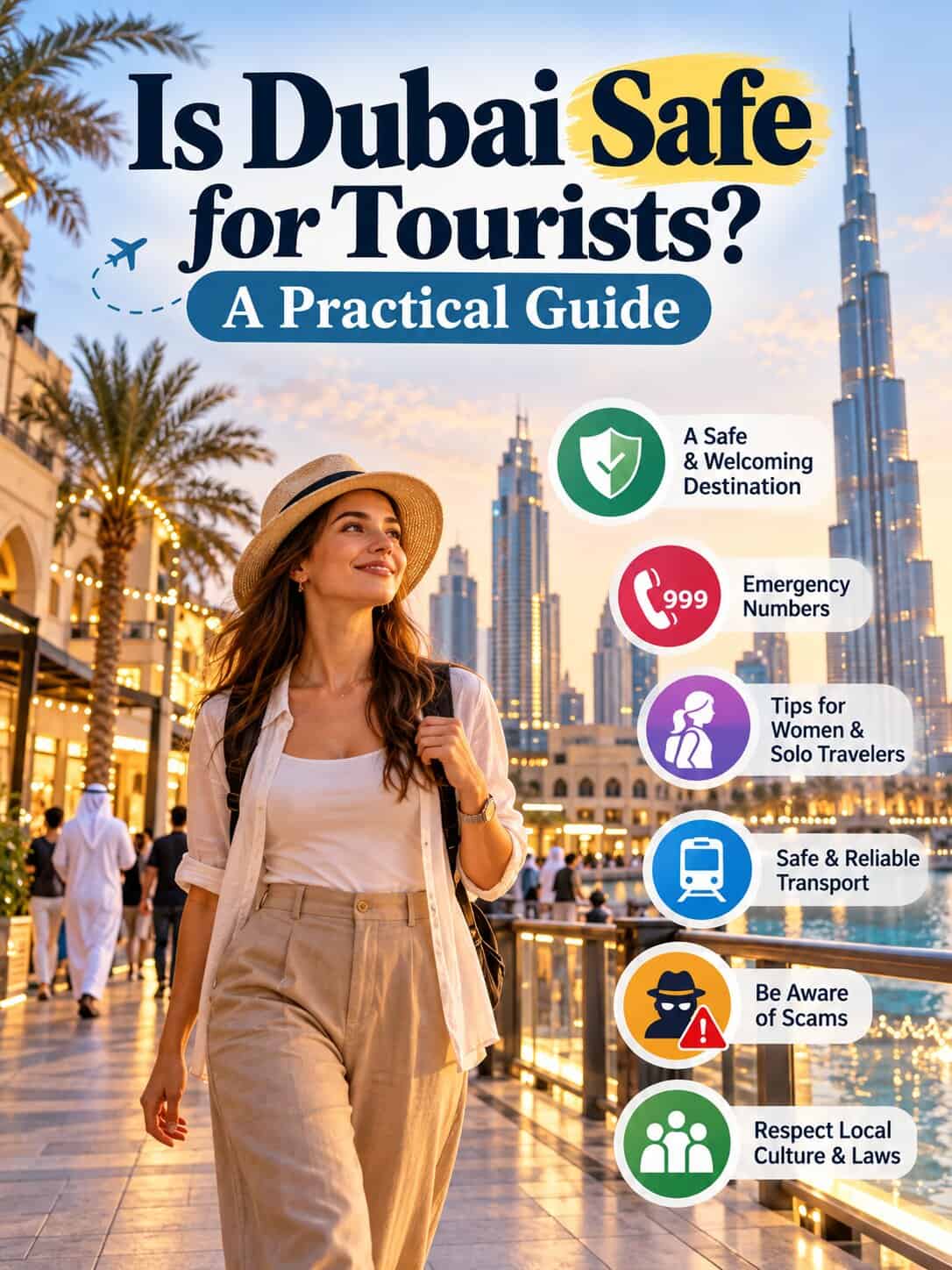
Is Dubai safe for tourists? Yes, by a wide margin compared with most major travel destinations, but “safe” in the UAE means something different from what it does back home. The real risks are minor scams, summer heat, aggressive driving and local laws that visitors break without meaning to, not violent crime. The separate, bigger question right now is the regional conflict in the Middle East, which can close airports and airspace at short notice; the advisories section below explains what that means in practice. This guide starts with a quick risk table, then covers scams, legal rules, solo female travel, emergencies and what to do if something goes wrong. For planning the rest of your trip, see our complete Dubai guide and the UAE visa guide.
Is Dubai Safe? Risks at a Glance
| Risk | How likely | How to prevent it |
|---|---|---|
| Street crime and pickpocketing | Low | Keep phone and wallet in a front pocket or zipped bag in crowded malls, souks and metro stations |
| Fake or unlicensed taxis | Occasional | Use official RTA taxis, the metro or ride-hailing apps and insist on the meter |
| Scams (souvenirs, tours, timeshares) | Occasional | Book tours through licensed operators and ignore street offers near landmarks |
| Summer heat | High from May to September | Avoid midday outdoors, carry water and plan indoor stops |
| Traffic | Moderate | Cross only at crossings, be careful on wide roads and drive defensively |
| Drinking and public conduct | Depends on you | Follow venue rules, never be visibly drunk in public and keep affection discreet |
Risk levels here are general guidance, not guarantees. Anywhere in the world, common sense still matters.
Is Dubai Safe? The Short Answer
Dubai regularly appears among the safest major cities in international rankings, and visitors consistently report feeling comfortable walking in busy areas late into the evening. The reasons are structural: a heavy police presence, extensive surveillance, strict penalties and a culture where visible crime is not tolerated. What crime exists skews toward property offences such as theft. Online fraud is the one area that keeps growing, and it affects phone and card users anywhere, so use secure networks and be wary of unsolicited links.
Is Abu Dhabi Safe Too?
Yes. Abu Dhabi has a similar, often slightly calmer, reputation, and both emirates follow the same federal laws. The main difference is atmosphere: Abu Dhabi is quieter and less crowded, so scams are less common, while Dubai simply has more tourists and therefore more tourist traps. If you are comparing the two cities, our Abu Dhabi versus Dubai comparison covers the differences.
Common Scams and Petty Crime
The realistic risk in Dubai is being mildly ripped off, not mugged. Typical examples are unmetered taxi rides or “broken meter” claims, inflated souvenir and carpet prices in tourist souks, misleading timeshare and “free gift” offers, and unregistered operators selling desert safaris or boat trips that do not deliver. The fix is consistent: use licensed transport such as official taxis, the Dubai Metro, or well-known ride-hailing apps, and book tours only through operators with visible licensing and reviews. Never get into an unmarked car that offers you a lift.
Legal Risks Tourists Actually Trip On
The UAE legal system catches visitors who assume local laws mirror home. These are the most common problems:
- Public intoxication is a real offence and can lead to arrest. Our guide to alcohol and dress code rules explains where drinking is allowed and what to wear.
- Public displays of affection beyond hand-holding can draw a fine, even if enforcement in tourist zones is inconsistent. Holding hands is fine, but kissing in public can lead to arrest.
- Drugs and medication: there is zero tolerance, and some prescription medicines that are legal at home are restricted. Narcotic and psychotropic (controlled) medicines need a free import permit from the Emirates Drug Establishment, issued online in one working day against a prescription from the last three months and a medical report from the last year, and you can bring no more than a three-month supply. Medicines that are not narcotic or psychotropic can be carried without prior approval.
- Vaping: import and usage rules for e-cigarettes can differ from your country, so check before travelling. Some e-cigarette refills and skincare products contain ingredients that are illegal in the UAE, such as CBD oil, so leave anything CBD-based at home.
- Photographing people: taking pictures of strangers without their permission is illegal, and men have been arrested for photographing women on beaches.
- Online behaviour: offensive gestures, public arguments and insulting social media posts have led to real legal consequences.
Is Dubai Safe for Solo Female Travelers?
Yes, and it is one of the more reassuring answers in this guide. The same heavy policing that keeps crime low means many women travelling alone feel comfortable here. The Dubai Metro has women-and-children carriages (marked pink) at the front of each train, and licensed taxis and ride-hailing apps are a sensible default day or night. There are also special taxis for women and children, which you can hail from the roadside or book in advance.
After Dark and Night Transport
After dark, choose licensed taxis or a ride-hailing app, check the plate and driver details before you get in, and share your trip with someone you trust. Avoid walking alone through empty residential streets or souks once they have emptied out late at night.
Dress, Nightlife and Beaches
Modest dress (shoulders and knees covered) outside clearly touristy zones draws less unwanted attention, though it is not a legal requirement for tourists. Swimwear is fine at hotel pools and beaches but not in malls or streets. At nightlife venues, keep an eye on your drink and decline drinks from strangers.
Is Dubai Safe for Families and Beaches?
Families will find Dubai very easy: clean public spaces, plenty of child-friendly attractions and a strong emphasis on public order. Watch children near water and obey lifeguard flags at public beaches. In summer, schedule outdoor activities for early morning or evening.
Natural Hazards and Practical Risks
The desert climate is the most underrated risk. Extreme summer heat, regularly above 40°C from May through September, brings real dehydration and heat exhaustion danger, so see our guide to weather and seasons for month-by-month detail. Flash flooding is rare but no longer theoretical after the record rainfall of April 2024, so check forecasts during winter rain. Sandstorms can reduce visibility and air quality with little warning. UAE driving is faster and more aggressive than many visitors expect, so take extra care as a pedestrian on wide roads or if you rent a car. Crossing anywhere other than a designated pedestrian crossing is illegal and can bring a fine or even imprisonment.
Travel Advisories and Staying Informed
General street safety and changing regional conditions are two different things. Day-to-day safety in Dubai is very high, but regional political situations, flight disruptions and local laws can change. Follow the latest official guidance from your own government before you travel and again before departure, and register with your embassy if it offers a service for travellers.
Regional Conflict and Flight Disruption
Since the regional conflict began in early 2026, there have been strikes and retaliatory attacks across the Middle East, and the situation can escalate suddenly. For people in the UAE, the main physical risk is falling debris from interceptions, and you are safest inside a solid building. If the authorities tell you to take shelter, stay indoors, ideally in an interior room or stairwell with few external walls or windows, follow local instructions and never approach or touch drone or missile fragments. Airports and airspace can close at short notice, so keep your travel documents up to date, avoid very tight onward connections and choose travel insurance that covers your itinerary and emergency expenses.
Healthcare and Travel Insurance
Healthcare in Dubai and Abu Dhabi is excellent, and private hospitals are used by medical tourists as well as locals. The catch is cost: treatment without insurance can run into serious money quickly. Take a policy with solid medical cover and a network of good hospitals, and check the current entry and visa requirements for your nationality, since rules can change.
What to Do If Something Goes Wrong
Emergency Numbers
Police: 999. Ambulance: 998. Fire: 997. Dubai Police also have a non-emergency line, 901. These numbers work across all seven emirates and are answered in English and Arabic. Save them before you land, together with your hotel’s address in English and Arabic for taxi drivers.
If Your Passport or Phone Is Stolen
Report the loss to the police and keep the written report. Contact your embassy or consulate for an emergency travel document if your passport is gone, then tell your hotel and your travel insurer. Block lost cards and phones immediately.
Frequently Asked Questions
Is Dubai safe for tourists overall?
Yes. Dubai is regularly named among the safest major cities for visitors, and violent crime against tourists is rare. The realistic problems are petty theft, minor scams, heat and local laws that visitors do not expect. The main open question is the regional conflict, which can disrupt flights at short notice.
Is Dubai safe at night?
Generally yes, including in busy tourist areas, thanks to heavy policing and good lighting. Avoid empty residential streets and quiet souks late at night and use licensed taxis or ride-hailing apps instead of walking long distances alone.
Is Dubai safe for solo female travelers?
Yes, it is widely regarded as one of the more reassuring destinations for women travelling alone. Women-only metro carriages, licensed taxis and ride-hailing apps help, but the usual big-city precautions still apply after dark.
Is Abu Dhabi safe compared with Dubai?
Both emirates are very safe for visitors and follow the same federal laws. Abu Dhabi is calmer and less crowded, while Dubai has more tourist-trap scams simply because it has more tourists.
What should I do if my passport is stolen in Dubai?
Report it to the police, get the written report, then contact your embassy or consulate for an emergency travel document and tell your hotel and travel insurer.
What are the emergency numbers in the UAE?
999 for police, 998 for ambulance and 997 for fire. They work across every emirate and are answered in English and Arabic.
Do I need travel insurance for the UAE?
It is strongly recommended. Hospital care is excellent but expensive without cover, and entry or visa requirements can change, so check the current rules for your nationality before you travel.
Bottom Line
For the overwhelming majority of visitors the answer is simple: yes, more so than most cities you have already visited, as long as you take the legal rules as seriously as the low crime rate, carry proper insurance and apply normal common sense about scams and heat.